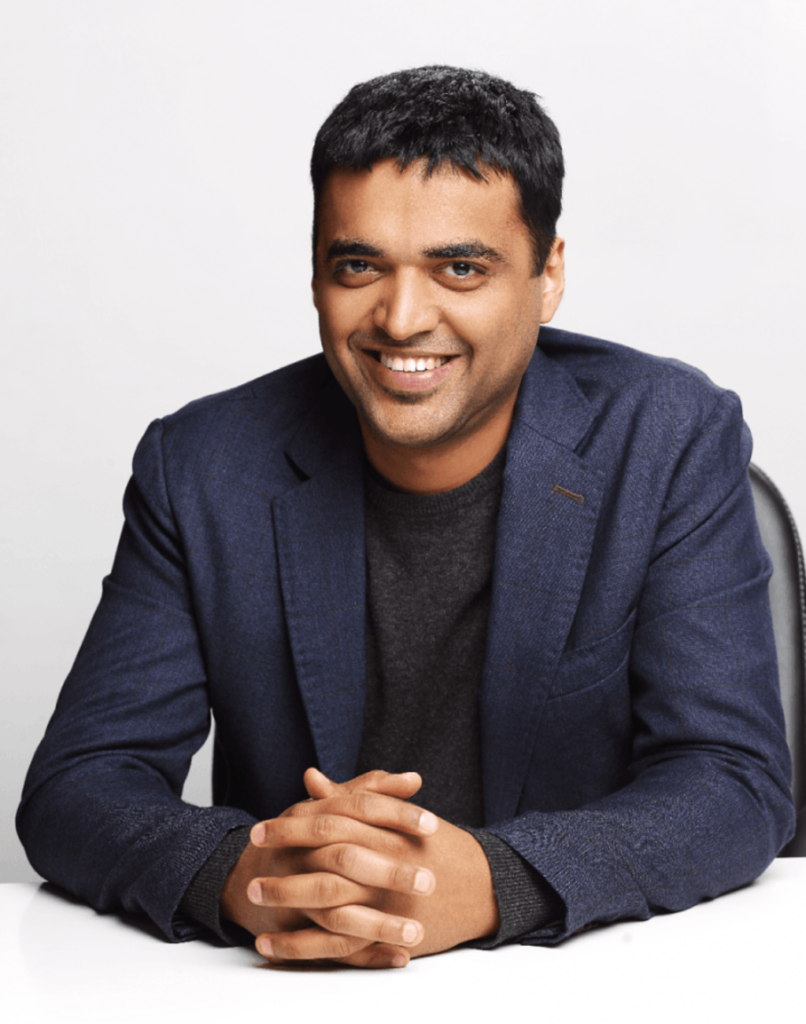

He quit school at 14, learned chess at a cafe, taught himself to trade stocks, and ended up building a multi-billion dollar empire before turning 35.
Most parents would panic if their 14-year-old said he was dropping out of school. Nikhil Kamath’s parents weren’t thrilled either. But looking back now, that decision — impulsive, risky, and very teenage — turned out to be the first move in one of India’s most unlikely success stories.
Today, Nikhil Kamath is one of India’s youngest billionaires. He co-founded Zerodha, the country’s largest stock brokerage by active clients, and True Beacon, an alternative investment fund for ultra-high-net-worth investors. He is also a venture capitalist, a podcast host, and a public intellectual who has become one of the most recognizable faces of India’s new generation of self-made wealth.
But none of that was obvious at 14, when he was sitting in a Bangalore chess cafe wondering what to do with his life.
The Early Years: Chess, Curiosity, and No Degree
Nikhil Kamath was born in 1987 in Shimoga, Karnataka, and grew up in Bangalore. By his own admission, he was never a conventional student. School bored him. He struggled to pay attention in class, found the curriculum disconnected from the real world, and eventually decided he had better things to do with his time.
At 14, he stopped going to school.
What came next wasn’t laziness — it was self-directed learning of a very unconventional kind. He started spending his days at chess cafes in Bangalore, playing competitive chess and making small amounts of money by winning games. Chess, it turns out, was not just a pastime for Nikhil — it was a training ground. The game taught him to think several moves ahead, to manage risk, to stay calm under pressure, and to accept losses without losing composure. Skills, as it happens, that transfer very well to financial markets.
“Chess taught me to think about probability, about risk versus reward. It’s the same muscle you use in trading and investing.”
— Nikhil Kamath
Around the same time, Nikhil started noticing the stock market. He began reading about it, asking questions, watching how prices moved. At 17, he got a job at a call centre — not because he needed the money badly, but because it gave him enough income to open a trading account. He started small, lost money, learned from it, lost more, learned more, and gradually got better.
By his early twenties, he wasn’t just breaking even. He was making real money trading equities and derivatives. No MBA. No finance degree. Just pattern recognition, discipline, and a chess player’s instinct for the game within the game.
The Kamath Brothers: A Partnership That Changed Indian Finance
Nikhil wasn’t working alone. His older brother, Nithin Kamath, had also been trading in financial markets and had a vision for a very different kind of brokerage firm. The two brothers saw the same problem from different angles: India’s stock broking industry was built on high commissions, complex systems, and processes that actively discouraged small investors from participating.
Most brokers at the time charged a percentage of every trade. On a big transaction, that could mean paying thousands of rupees in fees just to buy or sell a stock. It made no sense to either brother. Why should the cost of a trade depend on the size of the trade? Why not charge a flat fee?
That question became the foundation of Zerodha.
The Zerodha Model in Simple Terms: Instead of charging a percentage commission on every trade (the industry standard at the time), Zerodha introduced a flat ₹20 per executed order — regardless of trade size. For large traders, this was a massive saving. For small investors, it made the market genuinely accessible. The model disrupted an entire industry almost overnight.
Building Zerodha: India’s Largest Discount Broker
Zerodha was launched in 2010. The name itself is a combination of “Zero” and “Rodha” — the Sanskrit word for barrier. The idea was to remove the barriers that kept ordinary Indians away from financial markets.
In the beginning, growth was slow. The established brokers had decades of client relationships, large sales teams, and institutional credibility. Zerodha had none of that. What it did have was a genuinely better product and a pricing model that made financial sense for customers.
Word spread, slowly at first, then faster. Traders who had been paying heavy commissions switched. New investors, attracted by the low cost, came in for the first time. Zerodha built a technology platform called Kite that was clean, fast, and actually pleasant to use — a stark contrast to the clunky portals most brokers offered.
Crucially, Zerodha did all of this without raising venture capital. No investors, no external funding, no dilution. The brothers built the business purely on revenue — an almost unheard-of approach in the era of VC-fuelled startup growth. It took longer, but it meant they owned everything they built.
“We never raised money because we never needed to. The business paid for itself. That meant we could make decisions in the long-term interest of the customer, not the interest of investors.”
— Nikhil Kamath
Today, Zerodha is India’s largest stock broker by number of active clients — with close to 1.5 crore (15 million) registered users. It processes a significant share of India’s daily equity and derivatives trading volume. It did all of this without a single rupee of outside funding.
The Timeline: A Journey Built on Patience
True Beacon: Investing for the Ultra-Wealthy
Zerodha was built for the everyday investor. True Beacon was built for a very different customer — India’s ultra-high-net-worth individuals, people with crores of rupees to invest and sophisticated expectations about how their money should be managed.
Nikhil co-founded True Beacon in 2019 with a model that was unusual even by global standards: zero management fee, only a performance fee. The fund charges clients nothing unless it makes them money. If it delivers returns, it takes a share of the profits. If it doesn’t, it earns nothing.
This model requires enormous confidence in your ability to generate returns — and genuine alignment with the interests of your clients. It has helped True Beacon attract serious capital and build a reputation in India’s wealth management space.
The Podcast, The Public Life, and the Bigger Mission
In recent years, Nikhil Kamath has become known for something beyond his businesses: his willingness to have honest, long conversations about money, success, failure, and the Indian economic system.
His podcast and YouTube channel have featured conversations with some of India’s most notable entrepreneurs, thinkers, and public figures. He asks uncomfortable questions, challenges conventional wisdom, and speaks frankly about topics — tax, inequality, education, entrepreneurship — that most people in his position avoid.
He has also been vocal about his personal story in a way that resonates deeply with young Indians. He didn’t go to IIT or IIM. He doesn’t have a prestigious degree. He built what he built through curiosity, discipline, and a very high tolerance for learning from failure. That message — that formal credentials are not the only path — has made him a role model for a generation of young people who don’t fit the conventional mould.
What Made Him Different: The Real Reasons for His Success
Key traits that drove Nikhil Kamath’s rise:
- Self-directed learning: No school, no MBA — he taught himself everything through chess, trading, and real-world experience.
- Risk discipline: Years of trading taught him to size risks carefully and never let one bad bet wipe out everything.
- Long-term patience: Zerodha took years to scale. He never chased shortcuts or diluted the business with outside money.
- Customer-first thinking: The flat-fee model was designed purely to benefit customers, not to maximize short-term revenue.
- The right partnership: Building with his brother Nithin meant complementary skills, deep trust, and shared values from day one.
Failures and Setbacks Along the Way
Nikhil Kamath’s story is often told as a straight line from dropout to billionaire. It wasn’t. There were years of trading losses before there were profits. There were businesses that didn’t work out. There were moments of serious self-doubt — especially for a young man with no degree in a country that places enormous weight on academic credentials.
He has spoken openly about periods where he questioned whether he had made the right call leaving school. Where he watched peers go to college, get stable jobs, and build predictable lives while he was taking wild swings at something uncertain. Those doubts were real. He just didn’t let them stop him.
The chess mindset helped here too. In chess, you lose games. You lose important games. The question is whether you learn from the loss or let it define you. Nikhil’s approach to business failure has always been the same: understand what went wrong, adjust, and play the next game.
The Bigger Picture: What Nikhil Kamath Means for India
India is a country where the typical path to success runs through specific academic institutions, specific entrance exams, and specific professional credentials. Engineering, medicine, civil services — these are the paths families push their children toward. Entrepreneurship is respected in theory but treated with suspicion in practice, especially when it involves dropping out of education.
Nikhil Kamath is a direct challenge to that worldview. Not because he argues everyone should drop out of school — he doesn’t. But because his existence as a self-made billionaire proves that the conventional path is not the only path. That curiosity, discipline, and the willingness to learn from experience can take you places that no degree guarantees.
He has also, through Zerodha, genuinely changed how millions of Indians interact with financial markets. Before Zerodha, investing in stocks felt like something for wealthy people with expensive advisors. Today, a college student with ₹100 can open an account and start investing in minutes. That democratization of access is a real, lasting contribution — regardless of the business metrics.
The Bottom Line
Nikhil Kamath’s story doesn’t fit neatly into any standard template. He’s not an IIT graduate who cracked a product idea. He’s not a Silicon Valley returnee who brought a foreign model back home. He’s a school dropout from Bangalore who taught himself chess, taught himself trading, built a business with his brother, and quietly became one of the most influential people in Indian finance.
What’s most remarkable is not the wealth — it’s the clarity of thinking. At every step, Nikhil made choices based on a deep understanding of what he actually valued: learning over credentials, ownership over funding, long-term thinking over quick wins. Those choices compounded over time, the way good investments always do.
He is, in many ways, living proof of the principle at the heart of every good investment thesis — that the best returns come not from following the crowd, but from thinking independently and having the patience to be right on your own timeline.