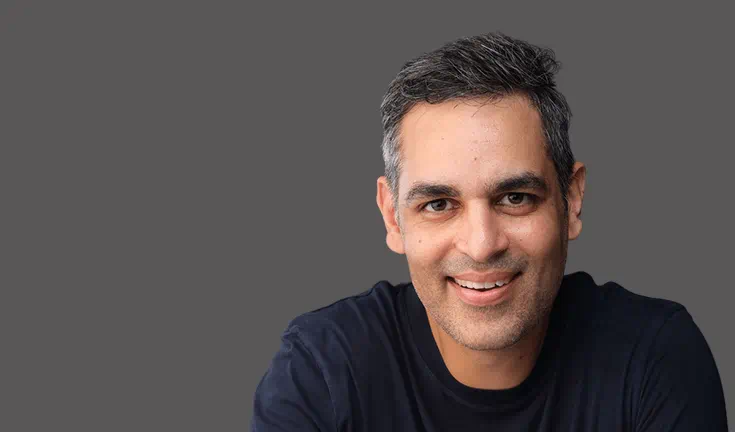
Businesses don’t usually shut down when they’re making money. That’s kind of the whole point — you keep going as long as the numbers are green. Which is exactly why Ankur Warikoo’s announcement on May 15 stopped so many people mid-scroll.
In a video posted on X, Warikoo looked straight into the camera and said something that almost nobody in his position ever says: “I’m shutting down my ₹100 crore courses business. Five years. Five lakh students. ₹100 crore in revenue. ₹25 crore in profits. All profitable. Completely shutting it down.”
And then, almost as an afterthought, the line that broke the internet: “It makes no sense to continue it.”
Within minutes, his comments section was a war zone of admiration, confusion, scepticism, and genuine curiosity. The post went viral almost immediately. Because here’s the thing — when a profitable business shuts down without any crisis, any scandal, or any external pressure, it raises a far more interesting question than a failure ever could.
Why?
A Quick Backstory for Those Who Don’t Know Him
Ankur Warikoo is one of those rare people who managed to exit the corporate world on his own terms and actually build something meaningful on the other side. He was the CEO of Groupon India and later of nearbuy.com — he knew boardrooms, he knew P&Ls, he knew how to run large organisations. In 2019, he left all of that behind to become a full-time content creator.
The move raised eyebrows at the time. Content creation as a career was still something many people in India’s business circles hadn’t fully taken seriously. But Warikoo was methodical about it. He built an audience across YouTube (now over 7 million subscribers), Instagram (nearly 4 million followers), and X, primarily around personal finance, entrepreneurship, productivity, and career advice — the kind of content that actually helps people make decisions about their money and their lives, not just entertain them for three minutes.
In 2020, at the peak of the pandemic, he launched an online courses business — operating under the WebVeda banner — teaching people exactly the skills he’d been talking about on social media. Finance. Career growth. Entrepreneurship basics. Self-awareness. The timing was near-perfect: India was locked down, people had time on their hands, and the hunger for structured learning was real.
Five years, 5 lakh students, and ₹100 crore later — he’s walking away.
The Single Word That Explained Everything
The internet did what the internet always does — it started theorising. Within hours, hundreds of comments had piled up speculating on why someone would voluntarily close a profitable business. Was there a legal issue? A rebrand? A bigger venture? Burnout?
Then one user asked directly: was AI the reason?
Warikoo replied with a single word: “Huge.”
That one-word answer set off a completely different conversation. Because it wasn’t just an admission — it was, in some ways, a warning. When one of India’s most successful creator-educators looks at what AI is doing to the online learning industry and concludes that continuing doesn’t make sense, that’s not just his personal decision. It’s a signal.
Think about what AI has done to the economics of online education in the past two years. The knowledge that Warikoo was packaging — finance fundamentals, career frameworks, productivity systems, entrepreneurship mindset — is increasingly available for free, on demand, personalised, and interactive through AI tools. ChatGPT, Gemini, Claude, and dozens of specialised AI tutors can now walk someone through concepts in real time, answer follow-up questions, adapt to their level, and do it at zero marginal cost.
That’s a structurally different world from 2020, when a well-structured video course from a trusted creator was genuinely the best way to learn this kind of material.
Warikoo, who built his entire brand on being honest about how the world actually works, is simply doing what he always told his audience to do: read the room, accept reality, and adapt.
The Internet Had a Lot of Feelings About This
The reactions to his announcement were, honestly, a mirror of how India talks about the creator economy — divided, sometimes uncharitable, and occasionally very sharp.
One user went straight for the jugular: “Cashing on the post-Covid boom, this guy has made 100 crore from 5 lakh gullible people.” Warikoo’s response? A casual “fr” — internet shorthand for “for real,” effectively agreeing that the post-Covid boom was real, without engaging with the “gullible” framing.
Another user offered what seemed like a veiled jab — that course sellers often pack up when a recession is coming, better to exit early. Warikoo’s reply: “Samajhdaar ko ishaara…” — a Hindi idiom that roughly translates to “a hint is enough for the wise.” Whether he was confirming the recession theory, acknowledging his own timing instincts, or just being cryptic for fun is genuinely unclear. Either way, the comment aged interestingly.
On the other side, supporters poured in. “This is a huge step sir… You’re truly an inspiration.” Warikoo responded by inviting everyone to a live session on May 16 at 8:30 PM where he promised to explain the full decision and reveal what’s coming next. His teaser: “Something big.”
One follower asked, half-joking: “Starting a university?” Warikoo’s reply: “Tumhaare mooh mein ghee…” — another Hindi idiom, roughly meaning “from your mouth to God’s ears.” So maybe not the most categorical denial.
The Harder Question Nobody Is Asking
Everyone is focused on the “why now” and the “what’s next.” But the more uncomfortable question is: what does this say about the entire online courses industry?
India’s creator economy has exploded in the last five years. Thousands of people — some legitimate, some not — have built businesses selling online courses. The formula has been reliable: build an audience on social media, establish authority, launch a course, sell via webinars or landing pages, repeat. At the top of the funnel, people like Warikoo genuinely created value. At the bottom of the funnel, a lot of low-quality courses sold on borrowed credibility also made a lot of money.
What AI does is ruthlessly separate the two. If your course is fundamentally packaging publicly available knowledge in a digestible format — that’s exactly what AI does better, faster, and cheaper. The value was never really in the information. It was in the trust, the curation, the structure, and the human accountability loop that comes with paying for something.
That human element still matters. But it has to be delivered differently. AI tutors don’t have personal stories. They don’t have the emotional resonance of watching someone who used to be broke talk about how they fixed their finances. They don’t replicate the social proof of learning alongside thousands of other students. These are real advantages that human creators still hold.
The question is whether those advantages are enough to justify a paid course model — or whether they’re better delivered in some other form.
Warikoo has apparently concluded that for him, the answer is no. Not because the courses weren’t good — they were. Not because students didn’t get value — they probably did. But because the model itself is becoming obsolete faster than it can be iterated on.
What Might Come Next
He’s promised to reveal more on May 16. The internet is bracing for anything from a new AI-powered learning platform to a community-based membership model to something nobody has predicted yet.
Given what he’s said — and more importantly, how he’s said it — a few things seem likely. Whatever comes next will be built with AI at its core, not as an afterthought. It will probably involve more direct, human connection rather than pre-recorded content. And it will almost certainly be built on the insight that the world doesn’t need more structured courses — it needs something that AI genuinely can’t replicate.
What that looks like, exactly, is the question everyone is waiting to see answered.
What This Actually Means
Ankur Warikoo built something real. Five lakh students, ₹100 crore in revenue, ₹25 crore in profit — that’s not a side hustle, that’s a serious business. Walking away from that while it’s still running, still profitable, before it becomes a problem — that takes a kind of honest self-awareness that is genuinely uncommon.
Most founders keep going long after they should have pivoted, because identity gets tangled up with the business. The company becomes who you are. Shutting it down feels like admitting defeat even when it isn’t.
Warikoo clearly doesn’t have that problem. He’s treated this the same way he’d tell his audience to treat a bad investment: cut your position when the thesis changes, not when the pain forces you to.
The thesis on online courses has changed. AI changed it. He saw it, he said it out loud, and he moved.
Whether you admire him for it or remain sceptical of the timing, one thing is hard to argue with: he read the shift coming and chose to move towards it rather than against it.
That’s not just good business instinct. For a guy whose entire brand is built on teaching people how to make smarter decisions — it’s also very on-brand.
Ankur Warikoo is scheduled to share the full explanation and reveal his next venture in a live session on May 16, 2026 at 8:30 PM.